
chronicle: the origin of spice
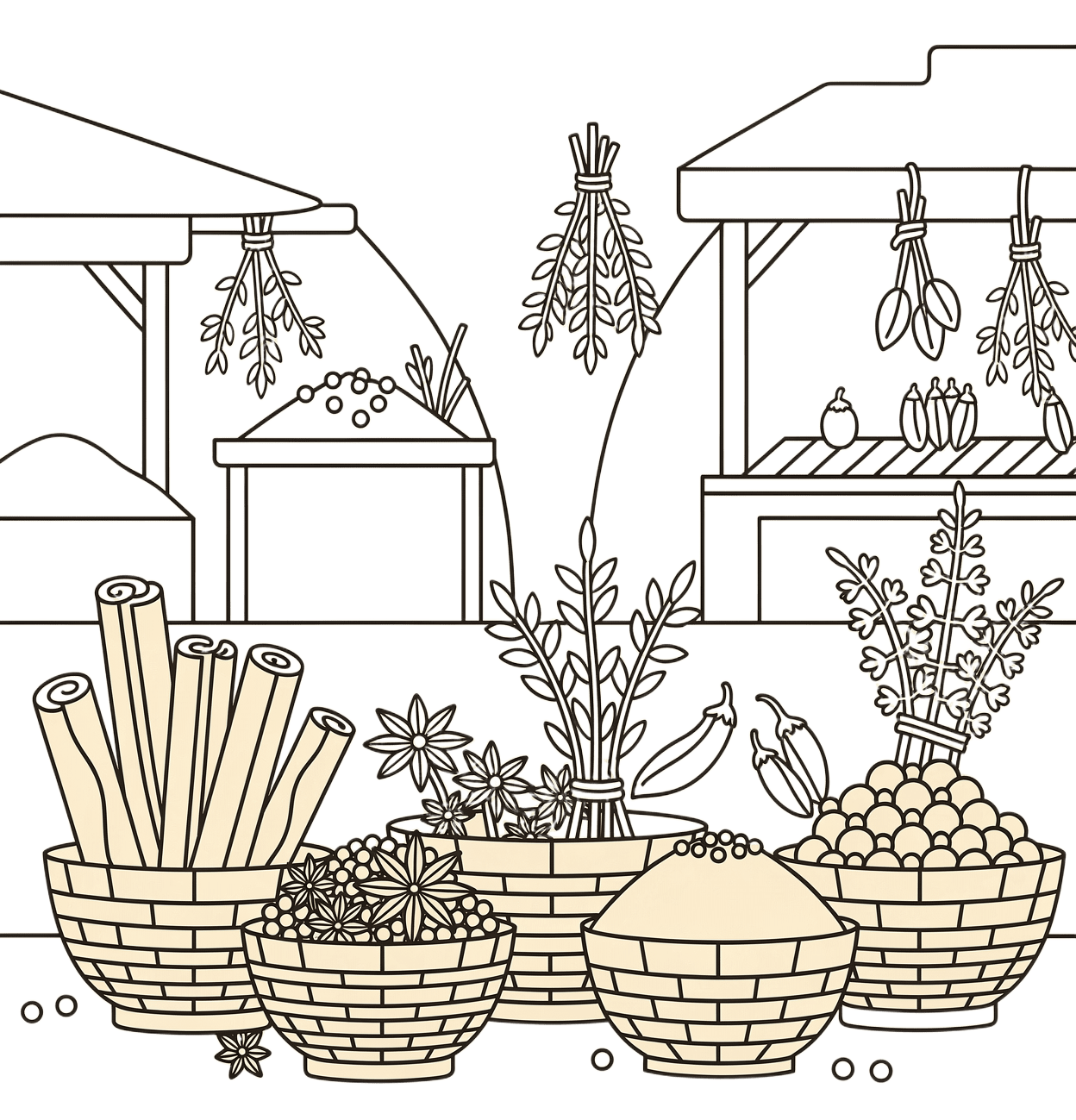
Before spice lived in jars, it lived in instinct. Long before recipes, before agriculture, before written language, humans were already in conversation with plants, tasting the world to see what it offered and what it warned against. Somewhere between hunger and curiosity, we learned that certain leaves warmed the body, certain roots lingered on the tongue, and certain seeds could transform necessity into pleasure. What began as survival quietly became ritual. What began as accident became desire.
Imagine for a moment what comes to your mind when you hear the word "spice". Almost anyone reading this at this very moment has at least a small collection of bottles, jars, or shakers containing a bewildering assortment of plant life including seeds, bark, roots or flowers which have been collected, chopped, dried or crushed into flavorings for the food you eat. Even if we look beyond food, the word spice has connotations of variety, zest, excitement and sensory pleasure which can be applied to your larger life.
The story of spice is older than the story of civilization itself and drove a surprisingly large volume of human history. Wars have been fought over it, fortunes made and lost pursuing it, new lands discovered and lost, and countless lives sacrificed all for the contents of those little jars or packets most of us now take for granted. It has been a long and vibrant dance between spice and humanity.
The Mystery of Early Spice Use
Nobody knows exactly how and when early humans started flavoring their foods with plant extracts, but archaeology has revealed some fascinating tidbits. Early humans, especially before the mastery of fire making, ate what they could scavenge, which included everything from roots, fruit, tubers, nuts, leaves, wild eggs, and raw meat from fish and small animals. The advent of cooking technology altered the taste of food, but it is still a mystery when plant additives were first discovered as flavoring agents.
Wrapping Theory
One theory suggests that leaves might have been used to wrap pieces of meat for storage, and that our ancestors noticed that contact with the leaves altered the taste of the meat.
Preservation Theory
Another theory is that certain flavors, like wild onion or garlic, could mask the flavor of rapidly spoiling food, thus making it useful to prolong their shelf life.
Antimicrobial Discovery
Also, while our ancestors may have had no clue about microbes, or the antimicrobial nature of some spices, they must have noticed that their food wasn't spoiling as quickly with certain plant flavors added.

The idea of spice as preservative, however, has some limitations for later spice history, when many valued spices became far more valuable than the food they were meant to preserve, and in some cases, more valuable than the house in which the food was prepared.
Archaeological Evidence
Rapidly advancing methods in archaeology, which allow us to chemically identify compounds in broken cooking pottery or even in expelled food waste itself, have identified some early evidence of plant flavors added to our ancestor's diets, proving that herbs and spices were being used in the stone age.
And to clarify, herbs generally refer to the fresh or dried leaves of plants, while spices are made from other parts, such as the seeds, bark, roots, flowers, or fruits of plants.

Beyond food, herbs and spices were also used for medicinal purposes, and in some cultures were seen as having even magical properties.
A Curious Paradox
One of the most curious aspects of the aromatic plants that we prefer as flavors for our food is that their strong odors and tastes evolved as a way of not being eaten. Wildlife will generally avoid pungent scents or unpleasant consistencies in plants.
New gardeners often frustratingly discover that the deer around their houses will think nothing of devouring any rose or daisy they try to plant, but they won't touch the spearmint they grow for their tea, or the oregano they add to their spaghetti sauce.

For some reason, humans started eating, cultivating and craving the very plants that most other species avoided.
Over time, as humans recognized the benefits of these plants, mothers genetically passed these preferences to their unborn offspring, so that now, a strong garlic smell that might cause one animal to scamper can evoke mouth-watering anticipation in a human.
From Humble Beginnings to Global Delight
So, from rather humble, or perhaps even accidental beginnings, spices have become an integral part of human existence and a beloved expression of enjoying the rich flavors of life. From a small range of limited natural flavorings, humans have come to cultivate and enjoy a wondrous, aromatic, and visually stunning range of herbs and spices.

A traveler can still enjoy the sensory overload of exotic global spice markets found in such storied places as Marrakech, Delhi, Istanbul, and Oaxaca, but one doesn't have to leave their home to indulge in the wonders of spice. Flavor Meditation is devoted to bringing you an extensive range of salt and spice mixtures to tantalize and delight the palate, while adding a depth of sensory enjoyment to your life.
PS - Ahead lie stories of trade and tradition, experimentation and obsession, of how these potent plants shaped the way we eat today. This is only the beginning. More chronicles to come...
